Losing a tooth puts you in a position most people are not prepared for. You sit down with a dentist, you hear two options, a bridge or an implant, and then you see two very different price tags. Most people make their decision based on the number in front of them and move on.
That is understandable. It is also often the wrong way to look at it, and by the time people figure that out, they sometimes wish someone had explained it differently from the start.
Here is the version of this conversation we actually have with patients at 26 North Dental.
What Is the Difference?
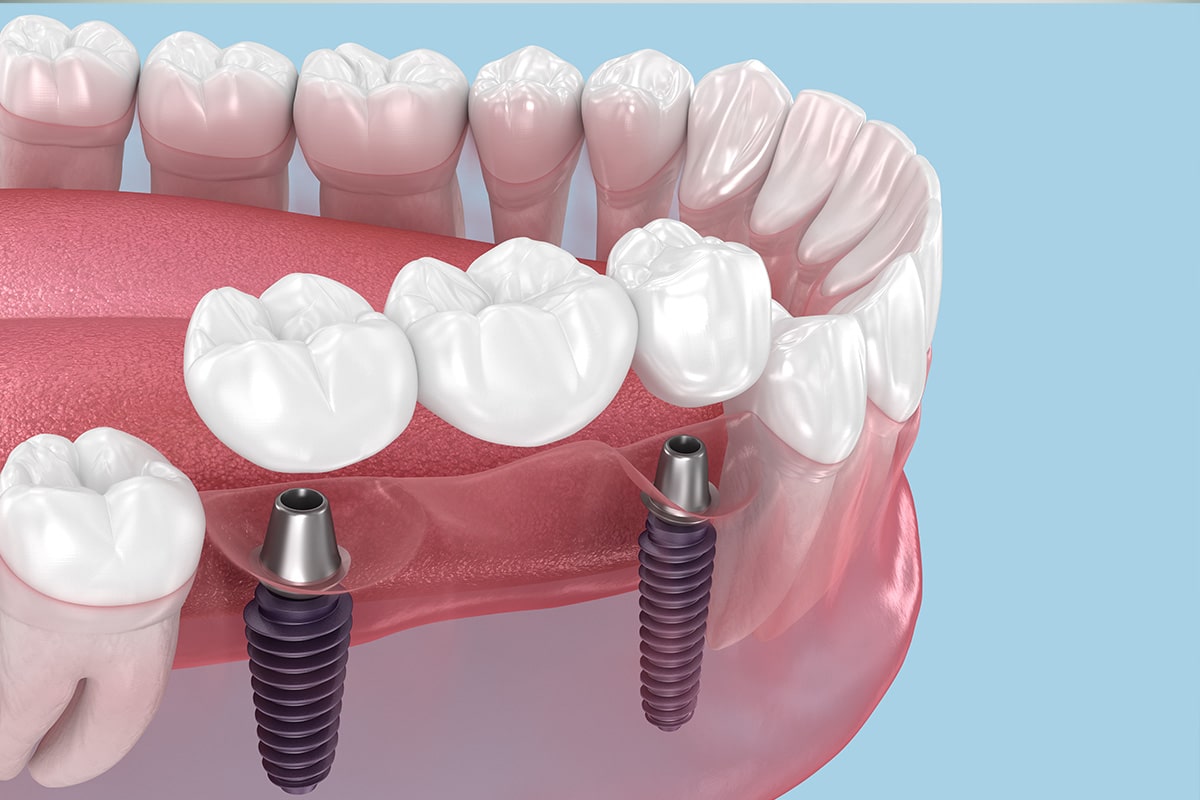
A dental implant replaces the entire tooth, root and all. A titanium post is placed into the jawbone where the missing tooth was, a healing period follows, and then a custom crown is attached on top. The end result looks, feels, and functions exactly like a natural tooth. It is completely independent of the teeth around it and does not require touching anything else in your mouth.
A bridge works by anchoring to the two teeth on either side of the gap. Those teeth are permanently crowned and a false tooth is suspended between them. No surgery is involved, which makes the upfront process simpler and the initial cost lower. But it requires grinding down and capping two otherwise healthy teeth that would not need to be touched if you chose an implant instead.
The Bone Loss Problem Nobody Talks About
This is the part of the conversation that most patients have never heard, and it is the single most important factor in this decision.
When a tooth is lost, the jawbone underneath it starts to deteriorate. The reason is simple: the bone in that area exists to support a tooth root. When there is no longer a root stimulating it, the body stops maintaining that bone and it gradually shrinks away. This process, called bone resorption, happens slowly but it is permanent. Over several years it can visibly change the shape of your face in that area, cause neighboring teeth to shift, and make future treatment significantly more complicated and expensive.
A bridge does not stop bone loss. It sits on top of the gum and spans the gap, but there is nothing in the bone. The deterioration continues underneath it whether you have a bridge or not.
An implant does stop bone loss because the titanium post functions like a natural tooth root. It sits in the bone and continues stimulating it the way your original tooth did. Patients who choose implants preserve the bone structure in that area for the long term.
This is why the cost comparison between an implant and a bridge is not as straightforward as it looks on paper.
The Real Cost Comparison
At 26 North Dental, a single dental implant including the post, abutment, and crown typically ranges from $4,000 to $6,500. A three-unit bridge typically ranges from $3,500 to $6,000 depending on the materials used.
The bridge typically takes less time to complete. But bridges typically need to be replaced every 10 to 15 years. When you factor in one or two replacements over the course of your life, the total cost often comes out close to the same or higher than a single implant that is designed to last permanently. And the bridge replacement still does not address the bone loss happening underneath.
We also offer a free implant consultation at 26 North Dental so you can get a specific number for your situation before making any decisions. Financing through CareCredit or Sunbit is available and can bring the monthly cost down to a range that surprises most patients when they see it laid out.
What the Implant Process Actually Looks Like
The procedure is done under local anesthesia. Most patients are surprised by how comfortable it is during the appointment. Afterward there is typically some swelling and soreness for a day or two, managed easily with over the counter pain medication. The majority of our patients describe the recovery as easier than they expected going in.
At 26 North Dental we use guided implant placement, which means your implant position is planned digitally using 3D imaging from our Dexis CBCT scanner before surgery begins. This improves precision, reduces the margin for error, and typically shortens recovery compared to freehand placement.
From surgery to final crown, the process takes approximately three to six months. The longest portion is the healing phase where the titanium post fuses with the bone. This cannot be rushed without compromising the result, but most patients have a temporary tooth in place during this time so there is no visible gap.
For patients with dental anxiety, we offer oral sedation at 26 North Dental. You can be fully relaxed throughout the procedure without being put under general anesthesia.
Is a Bridge Ever the Right Choice?
Yes, and we will tell you honestly when it is. If significant bone loss has already occurred in the area, a bone graft may be needed before implant placement is possible, which adds cost and time. Certain health conditions that affect healing can also make implants less straightforward. In those situations a bridge may genuinely be the better clinical recommendation.
Dr. Bennett will give you a straight answer based on what your X-rays and situation actually call for, not based on what is easier to place. If a bridge is the right answer for you, that is what he will say.
Ready to find out whether an implant or a bridge is right for your situation? We offer a free implant consultation at 26 North Dental. Call 954-369-1255 or book online at 26northdental.com. We serve patients in Parkland, Coral Springs, Coconut Creek, and West Boca.